
Chronological age doesn’t fully capture biological aging. Across 83 studies, we show that lifestyle, environmental, and social factors significantly shape epigenetic aging. Our MEAB-Index estimates how much of this aging is preventable—highlighting key targets to slow biological aging at the population level.
4 June 2026
We conducted a systematic review and meta-analysis following PRISMA 2020 guidelines. PubMed/MEDLINE and Scopus were searched from inception to 7 April 2026 for English-language observational and interventional studies reporting quantitative associations between modifiable determinants and EAA measured using validated clocks (Horvath, PhenoAge, GrimAge, DunedinPACE). A novel Modifiable Epigenetic Aging Burden Index (MEAB-Index) was developed to quantify the cumulative preventable burden.
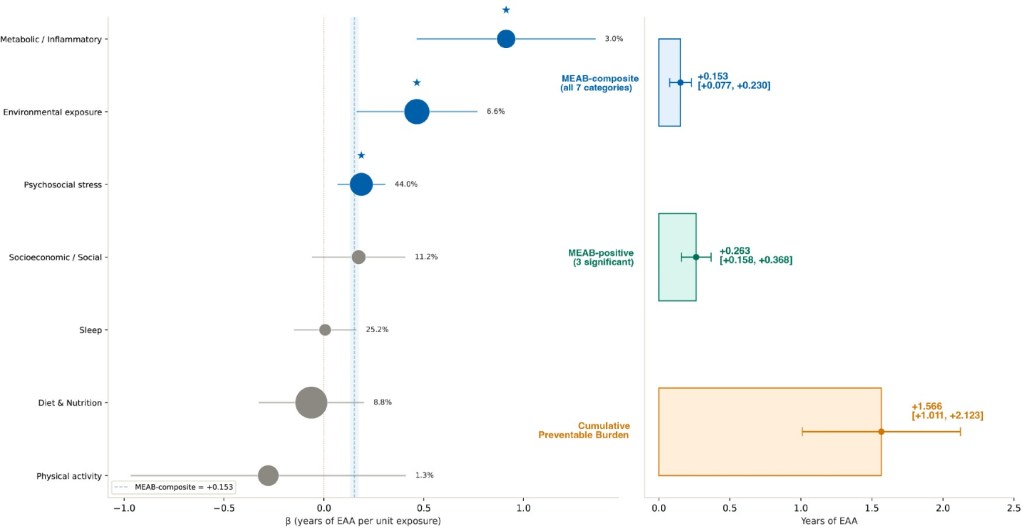
Eighty-three studies providing 118 distinct exposure–clock associations were included. In the primary analysis (Pool A, n = 60), adverse modifiable exposures were associated with accelerated EAA (pooled β = +0.310 years per unit exposure, 95% CI 0.255–0.366). The strongest associations were observed for metabolic and inflammatory markers (β = +0.913) and environmental exposures (β = +0.466). The MEAB-Index yielded a Cumulative Preventable Burden of +1.566 years (bootstrap 95% CI 1.011–2.123).
This study provides the most comprehensive quantitative synthesis to date on the modifiability of epigenetic aging. Our findings demonstrate that EAA is meaningfully shaped by behavioral, environmental, and social determinants. The MEAB-Index introduces a novel framework for estimating the preventable burden of biological aging and for prioritizing interventions. Reducing key modifiable risk factors, particularly metabolic/inflammatory and environmental exposures, could substantially slow biological aging at the population level and support the transition toward ageing-centered preventive strategies.
